
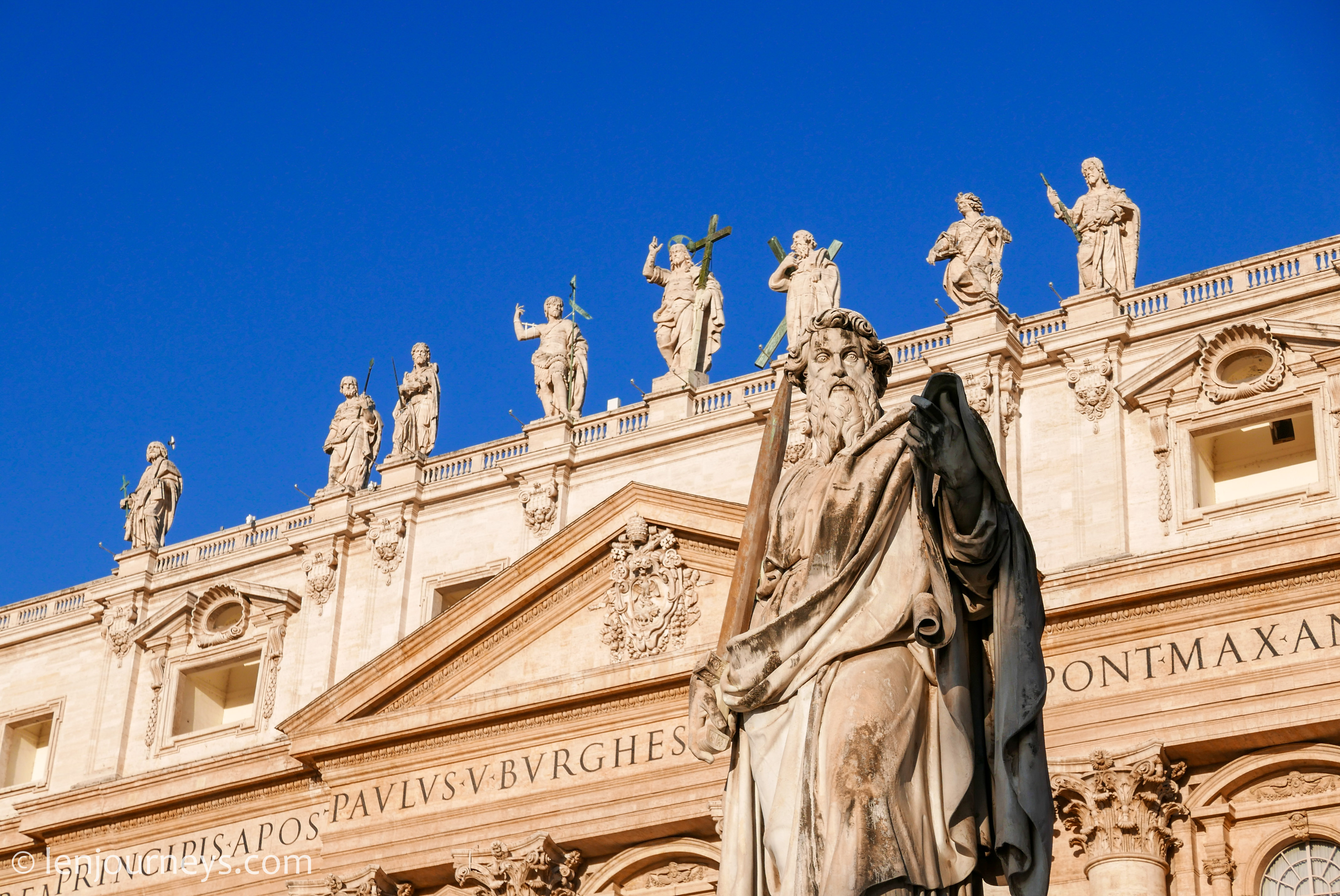
Despite being the world’s smallest sovereign state, the Vatican boasts immense wealth and influence, as evidenced by its magnificent basilica and museums—structures that appear almost miraculous when bathed in the first morning light.
Tiếng Việt
It was still dark when I beelined alongside priests, nuns, and pilgrims to enter St. Peter’s Basilica, the world’s largest church and the epitome of the Catholic faith. Since the end of the 1920s, this place has been an independent city-state with only 800 residents, completely encircled by modern-day Rome. Yet despite its minuscule size (only 0.49 km2), the Vatican holds immense spiritual influence over 1.4 billion faithful worldwide as the Pope’s main residence and the seat of the Catholic Church.
“Are you a tourist?” a soft voice called out behind me in Vietnamese. I turned around to find an elderly nun traveling with members of her church. “Yes, I am. Are you here for the papal audience, Sister?” I replied. “Correct. Our dream of praying in the House of the Lord is finally coming true,” she said, her voice beaming with excitement. Indeed, St. Peter’s Basilica feels like a wonder – a masterpiece of Renaissance and Baroque design on a scale impossible to comprehend, and certainly one of mankind’s greatest achievements.

1. St. Peter’s Basilica
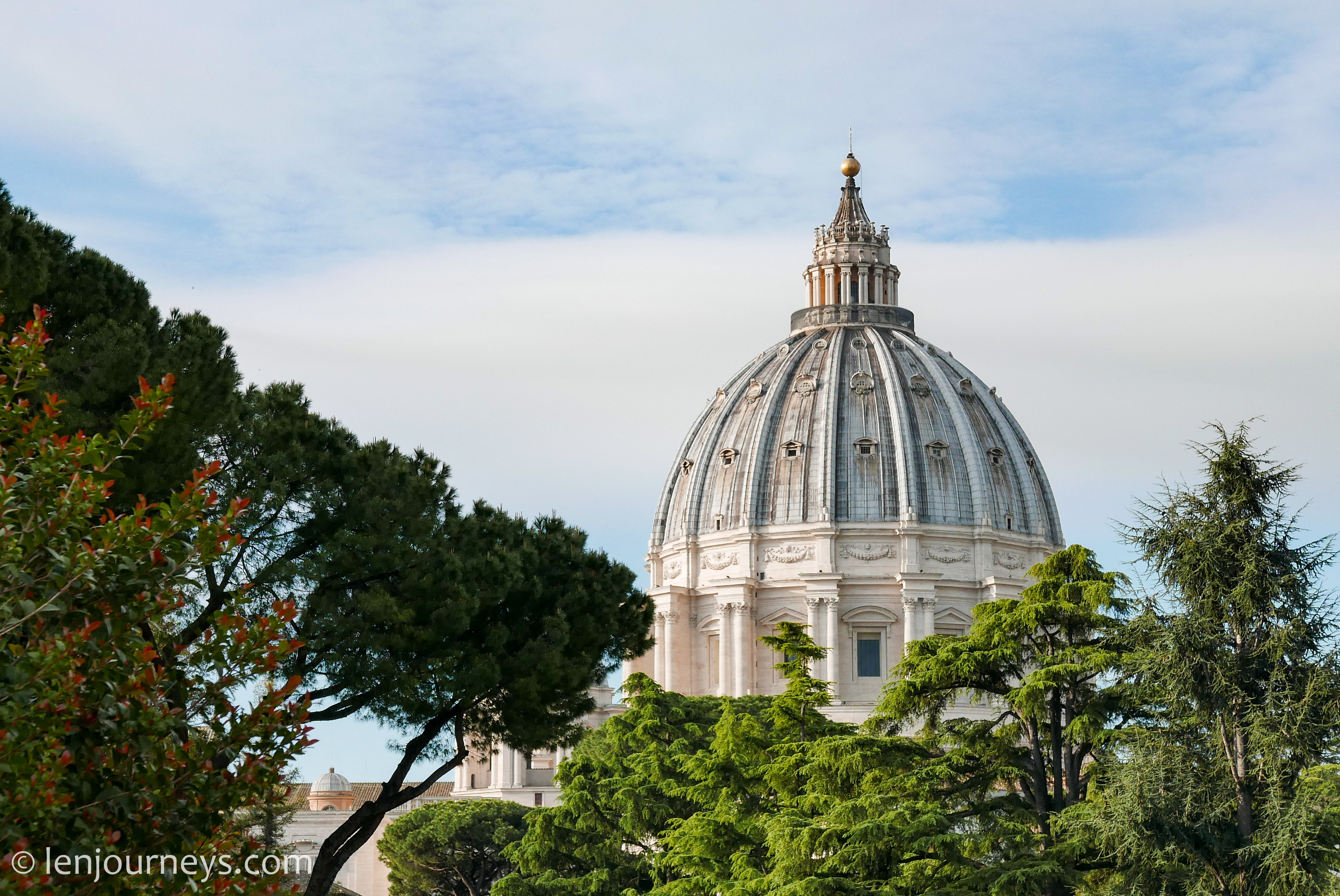
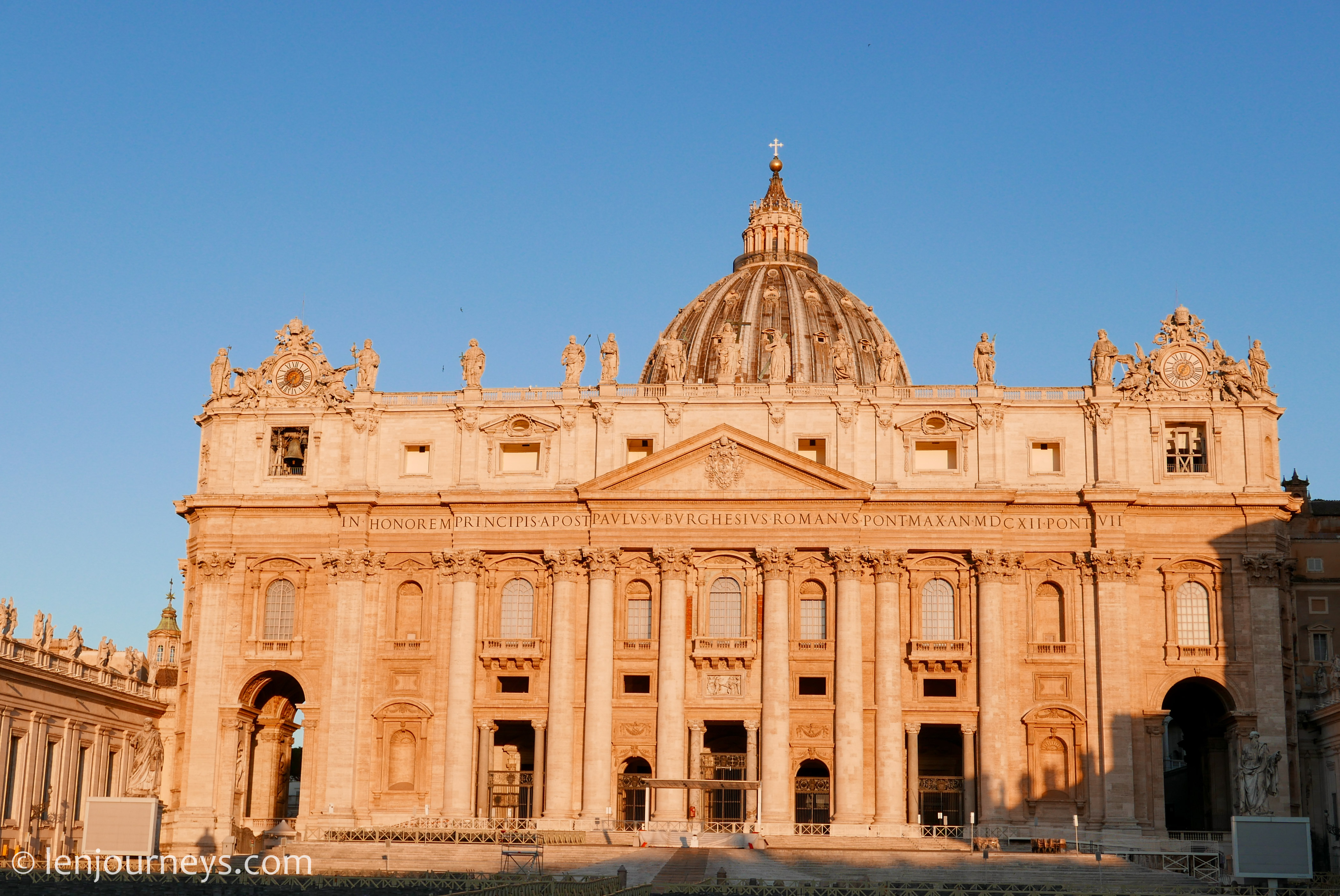
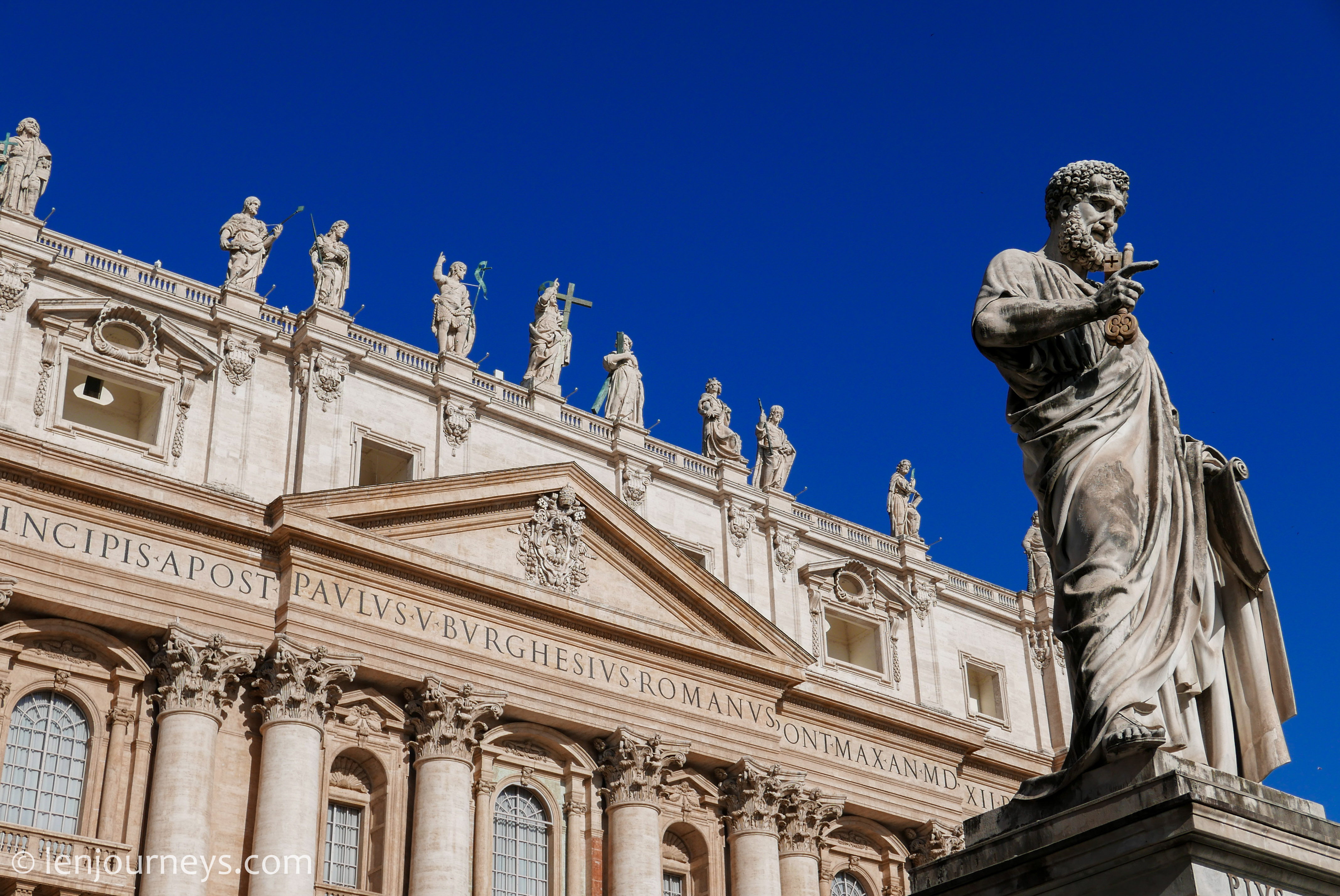
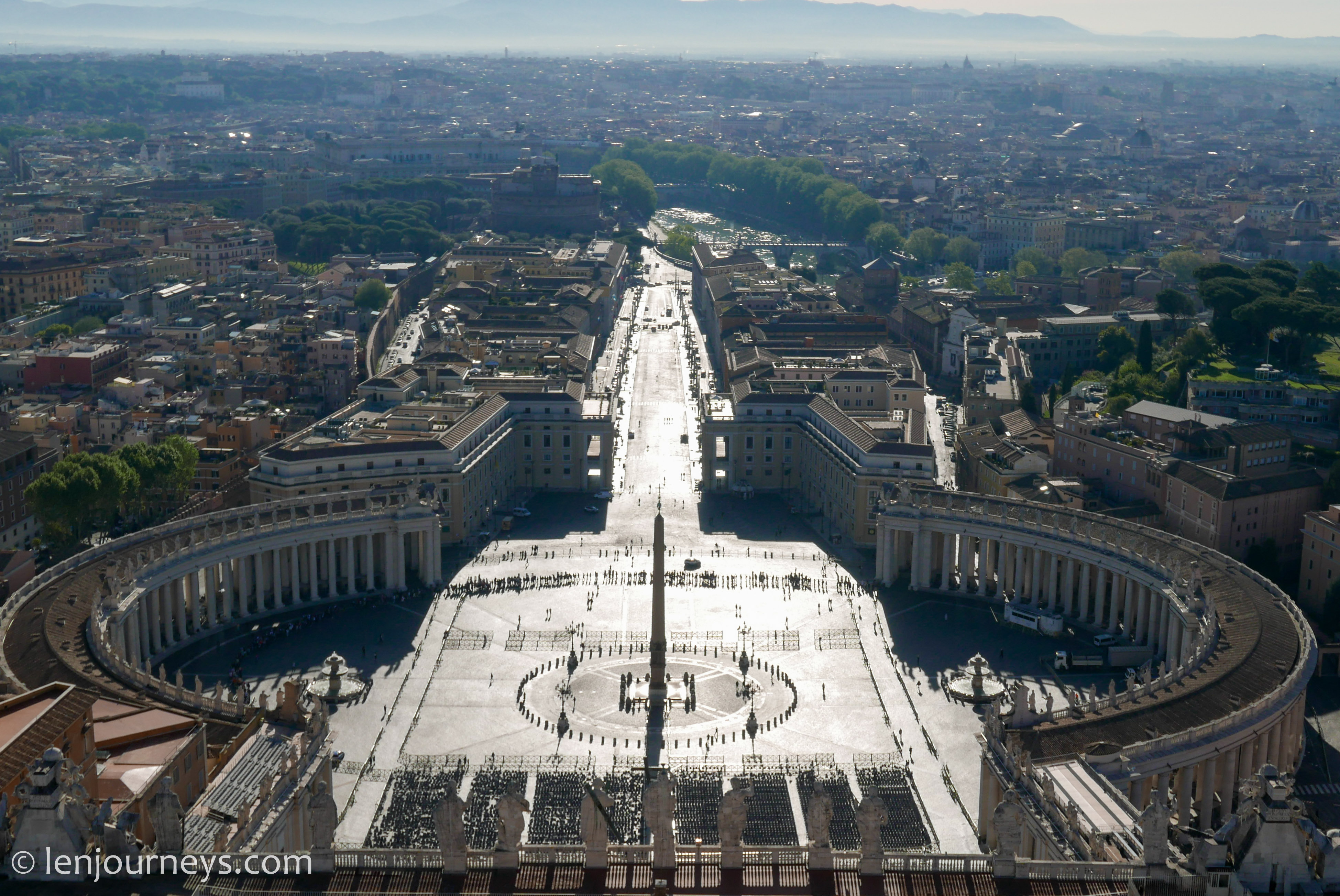
Passing through security, I quickly walked toward the grand entrance just as the first rays of sunlight seeped through the marble colonnade and struck the facade of the basilica. The morning light cast a warm, golden glow across the smooth white stone, bringing the exquisite statues of saints to life against the crisp sapphire sky. The light also illuminated the majestic dome rising behind the facade like a never-setting moon. Crowning at around 136 meters, the double-shelled dome, inspired by the one of Florence Cathedral, is Rome’s highest point, and it dominates the city skyline.
Completed in November 1626, St. Peter’s Basilica was the supreme ambition of Pope Julius II, one of the Renaissance’s most powerful and influential figures. He wanted to replace a decaying edifice built around 330 with a new basilica, over the presumed site of the tomb of the apostle Peter. For more than 120 years, many of Italy’s finest hands and brains worked on this legendary house of God. Donato Bramante initially designed it, while Michelangelo later conceived the impressive dome, and Bernini lastly executed the elaborate facade and the elliptical colonnades of the vast piazza.

The Interior
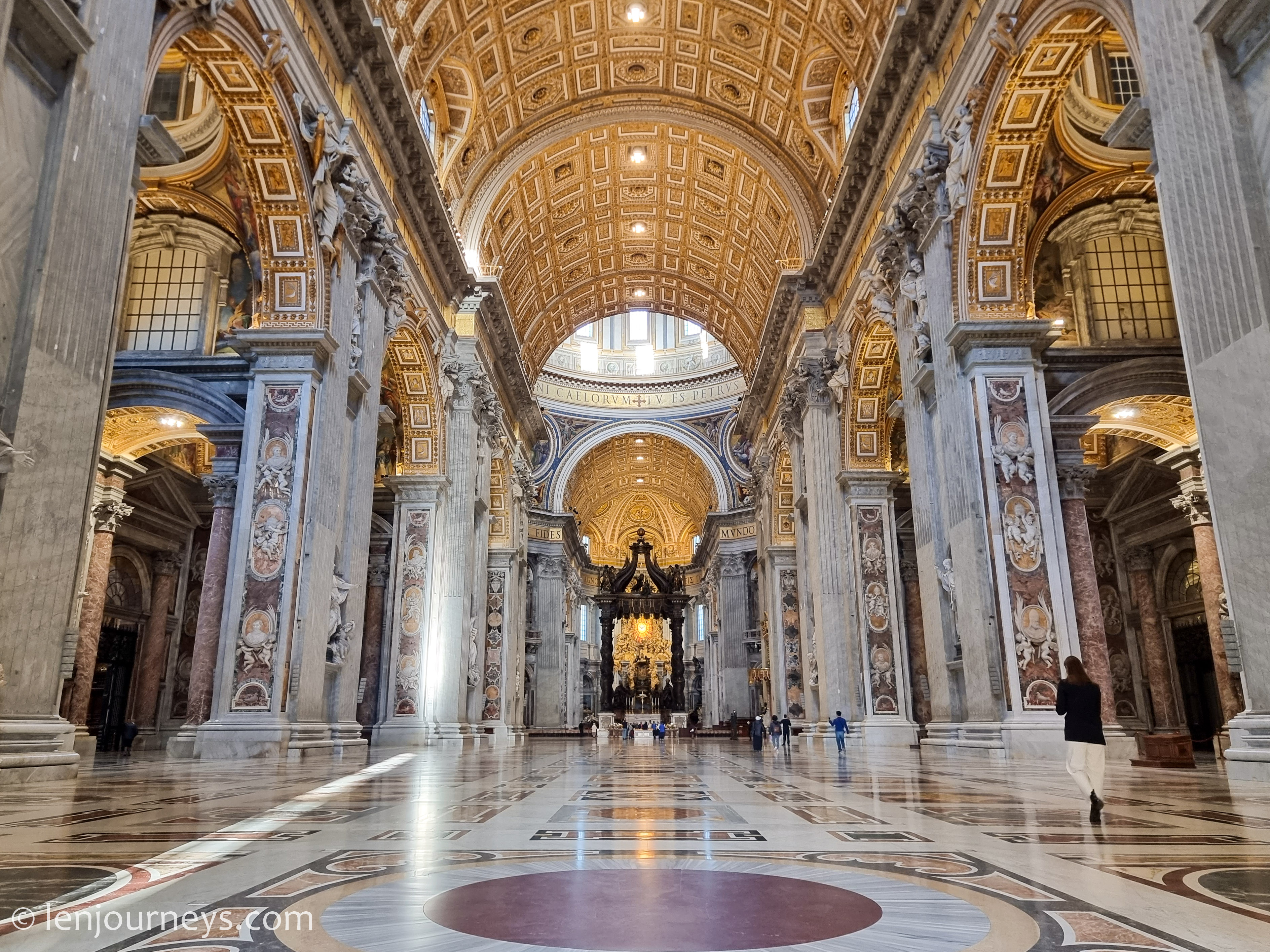
Stepping inside, the basilica’s enormous scale and opulence took my breath away. Virtually every surface is embellished with gilded ornaments, polychrome marble, intricate stucco, refined mosaics, and evocative sculptures. The basilica is laid out in the shape of a gigantic Latin cross, with its nave stretching 186 meters and easily accommodating tens of thousands of worshippers at once. At its eastern end stands Bernini’s famous baldachin, a monumental bronze canopy that shelters the tomb of St. Peter and the superb papal altar, where only the pope may celebrate Mass.
One of Christendom’s greatest achievements.
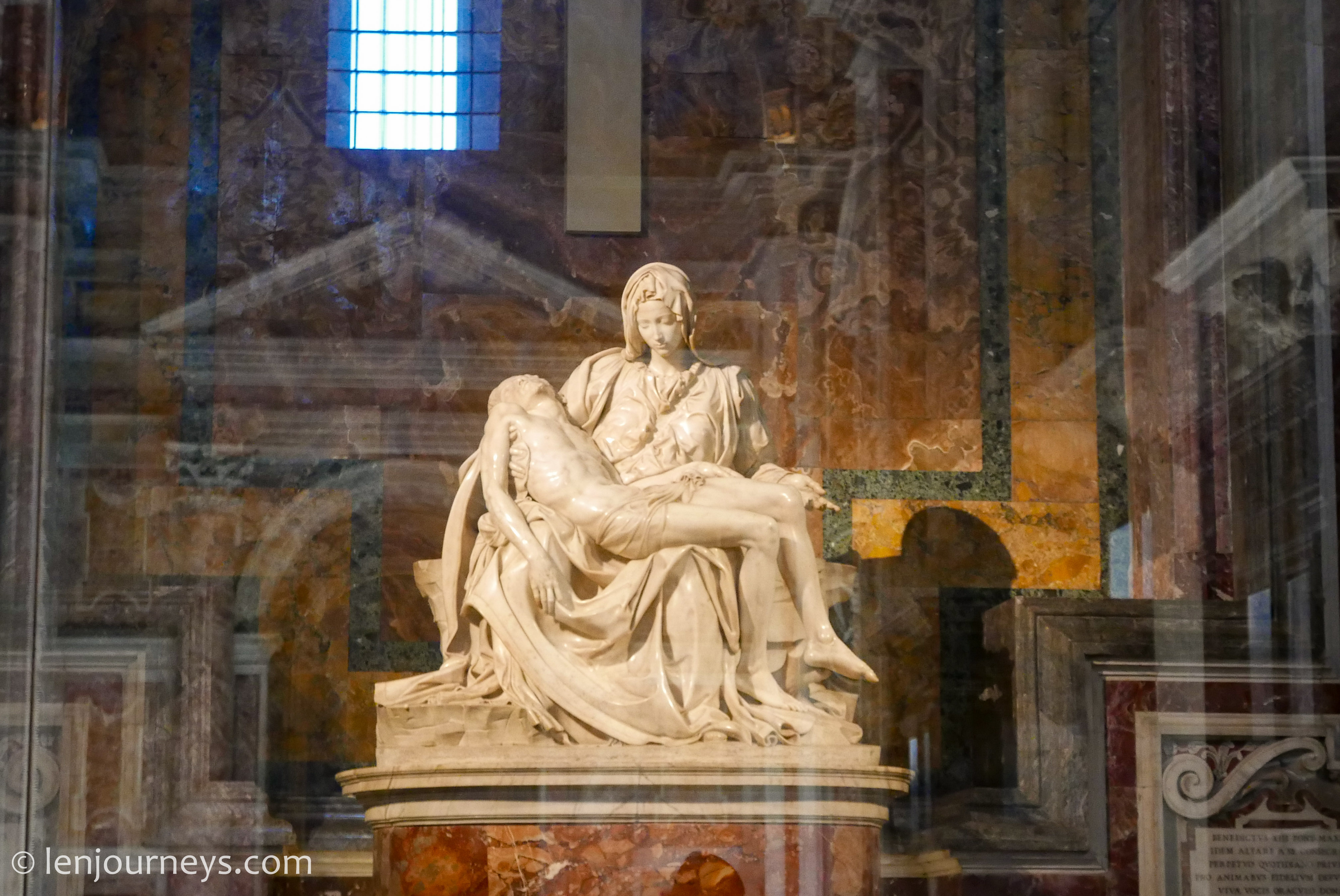
Above, Michelangelo’ soaring dome is equally magnificent, covered in brilliantly colored mosaics. Around its base, two-meter-tall sky-blue letters stand against a shimmering gold background, reading: “Thou art Peter, upon this rock I will build my church. And I will give unto thee the keys of the kingdom of heaven”. Elaborate stuccos and gilded carvings—crafted by generations of master artisans—further enrich the dome’s interior, making it a marvel of Christendom. Near the basilica’s entry sits another masterpiece by Michelangelo: the deeply moving Pietà, which skillfully depicts the Virgin Mary holding Jesus after being taken down from the cross.
Before leaving St. Peter’s Basilica, I ran into the Vietnamese nun once more. Her face was radiant. “A miracle, wasn’t it?” she gleefully asked. “It certainly is,” I agreed. “It feels like heaven—or as close to it as we can get,” I thought to myself. Although our paths and beliefs may differ, we both shared a quiet reverence for this incredible place, a testament to what humans can achieve when they turn to the divine for inspiration.




2. Vatican Museums
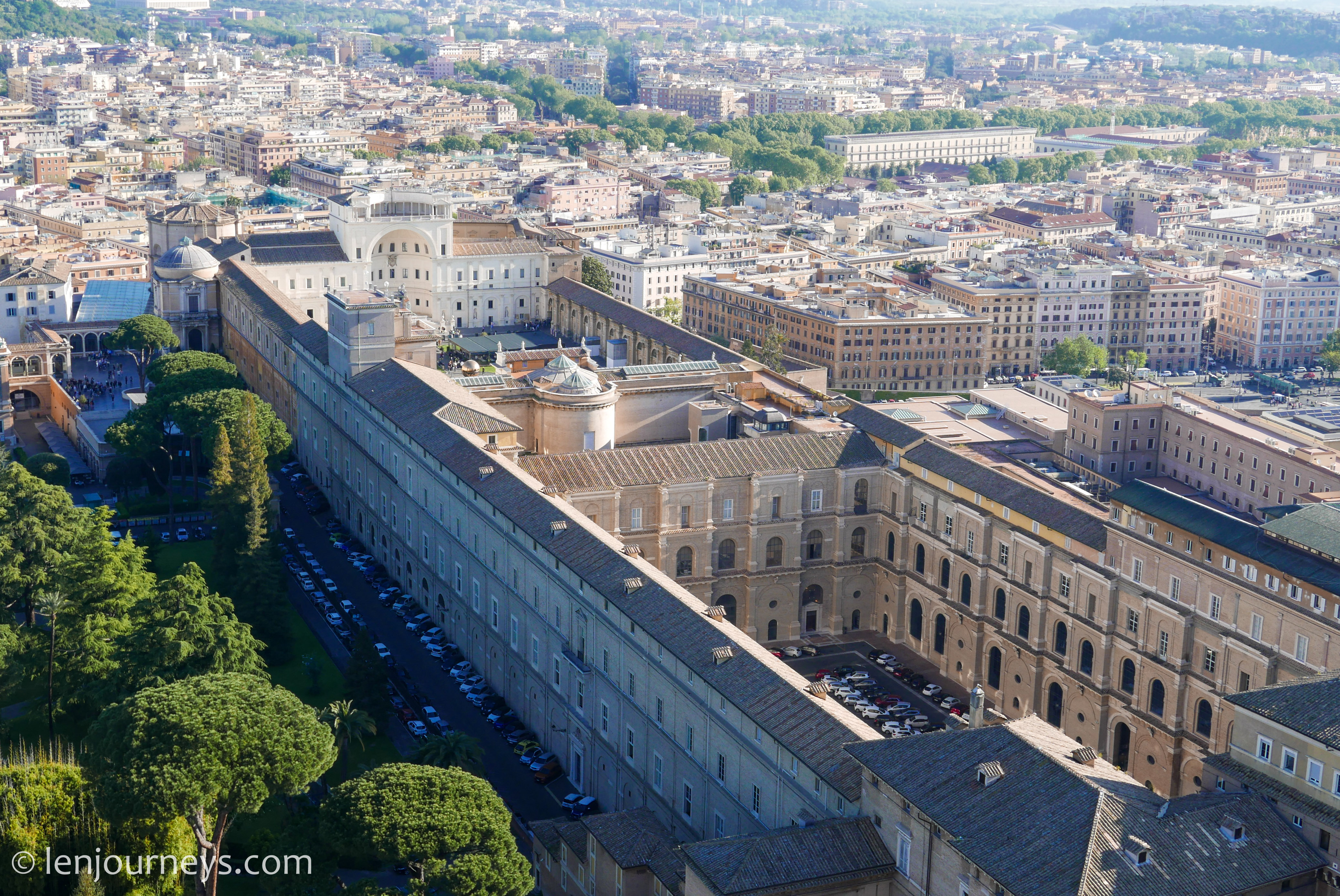
The next morning, I returned to the city-state for an early visit to the renowned Vatican Museums, an assembly of 28 galleries, chapels, and exhibition halls established by Pope Julius II in the early 16th century. From the outside, this huge complex resembles a formidable fortress with massive high walls encircling two courtyards. Inside, it’s, however, a treasury, holding an immense collection of roughly 70,000 artworks amassed by the Catholic Church and the papacy over the centuries. Here, ancient sculptures, Renaissance paintings, decorative objects, and ethnological artifacts are presented alongside contemporary art. Together with St. Peter’s Basilica, the Vatican Museums represent the Holy See’s wealth and power.
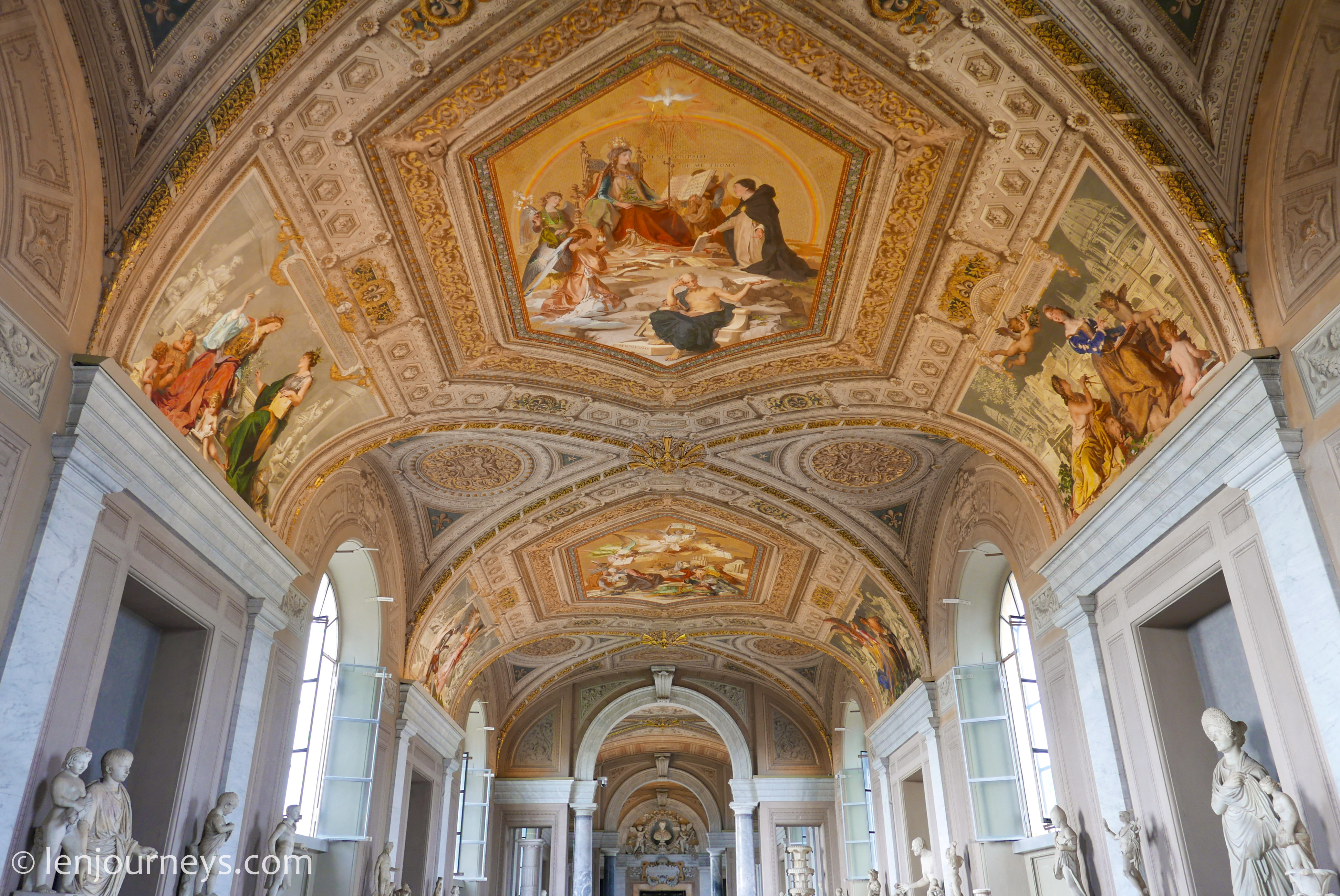
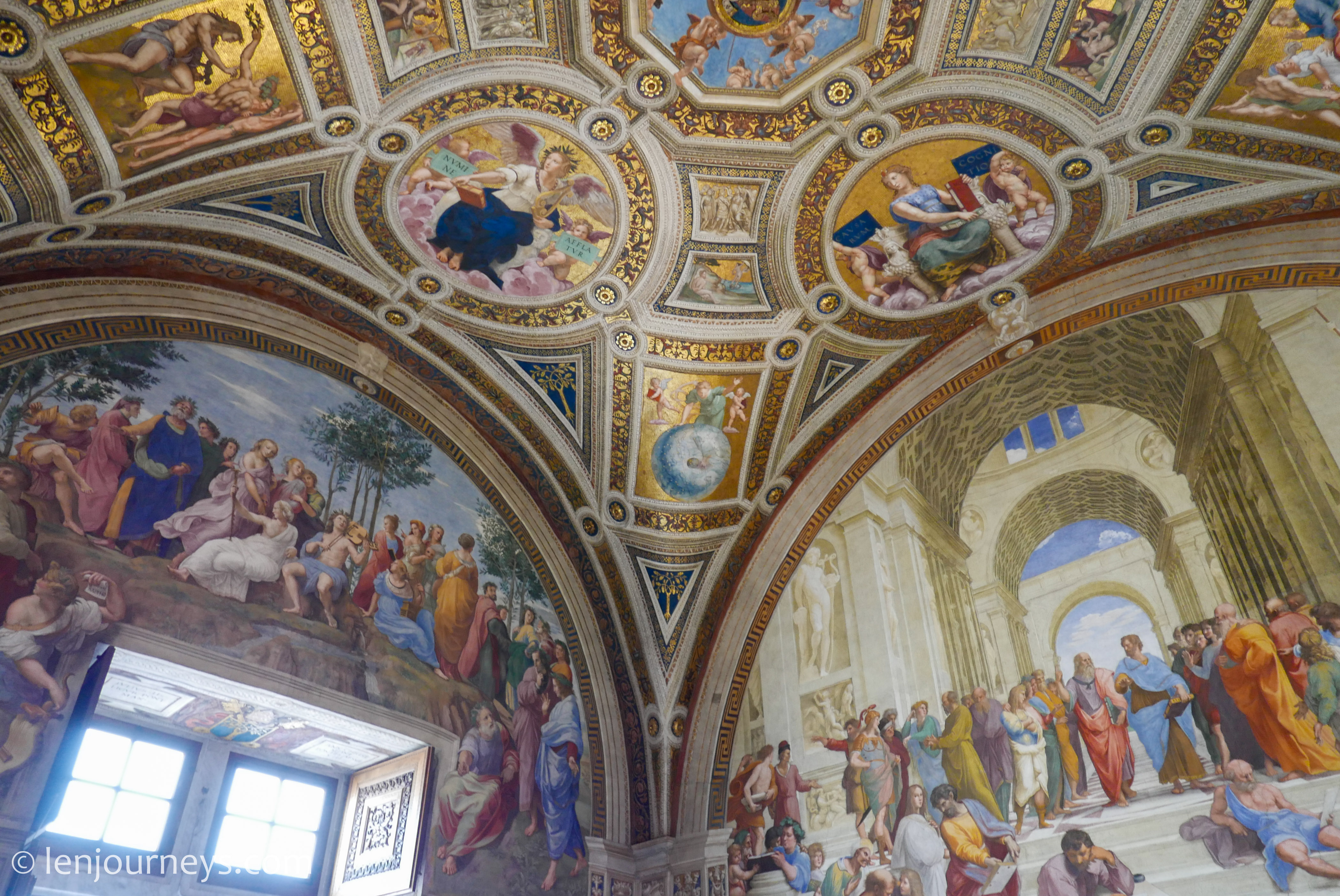
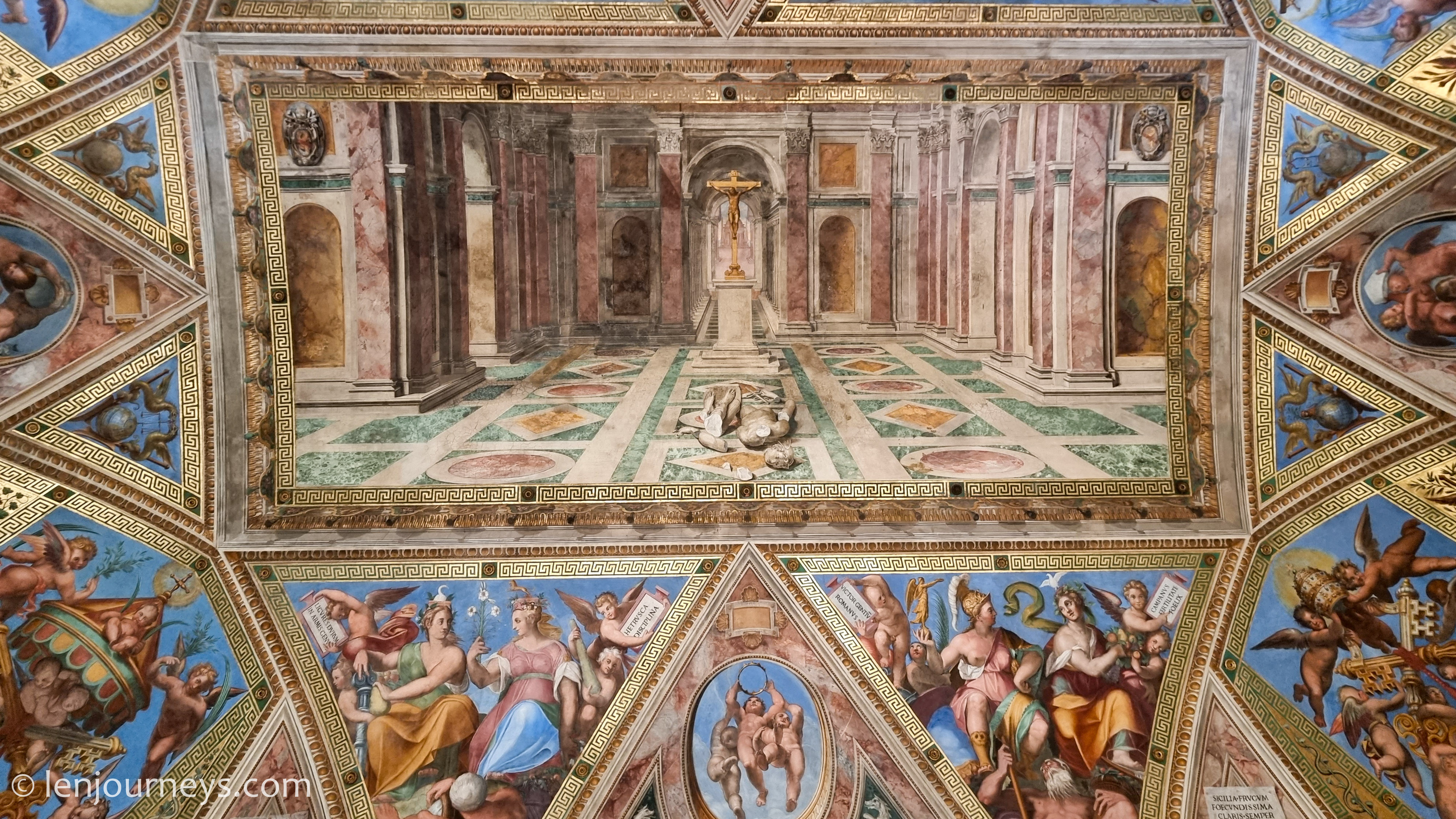
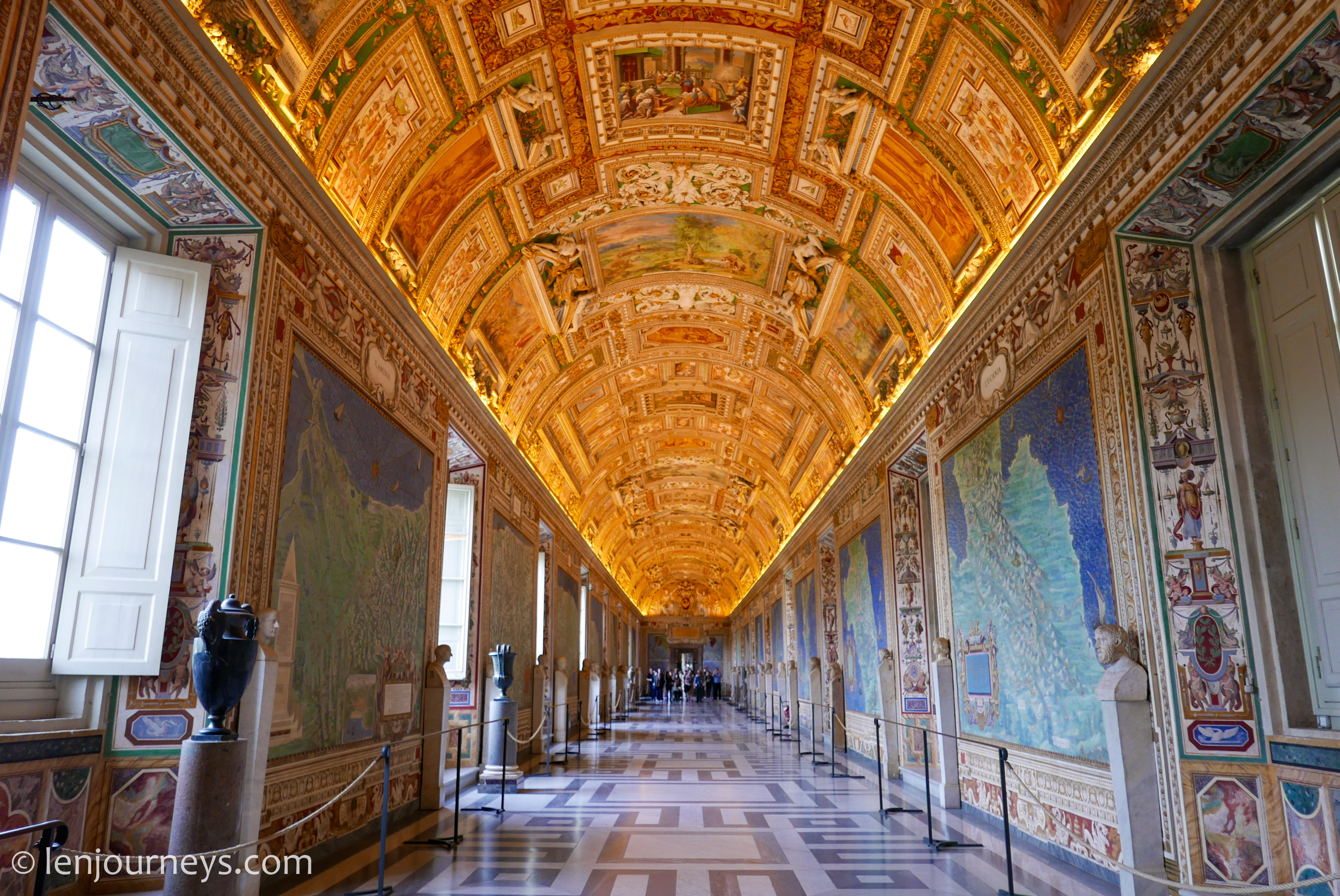
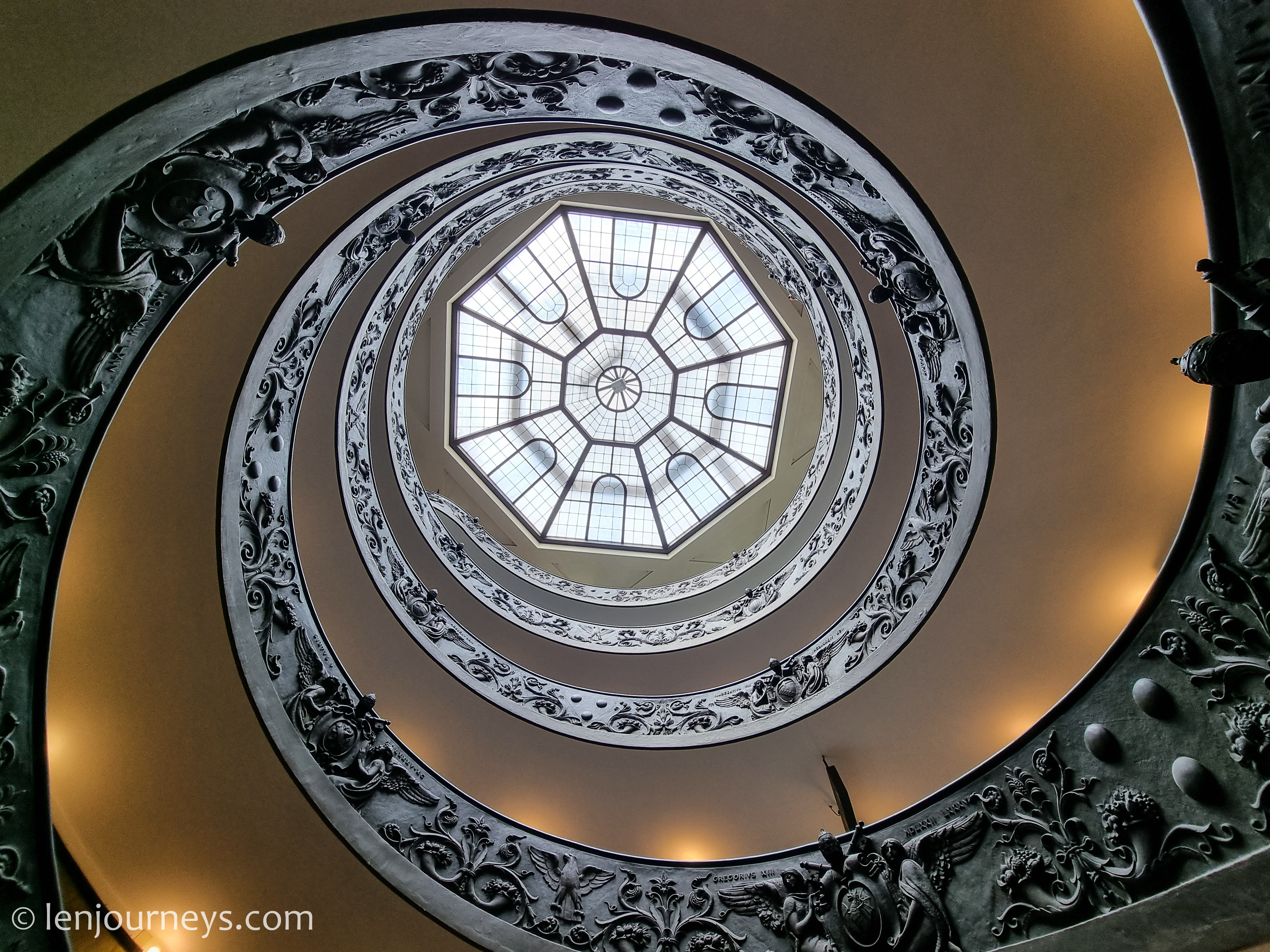
As part of the Apostolic Palace, the Vatican Museums blur the line between papal residence and public art galleries, with chambers lavishly adorned with fine stucco, sculptures, polychrome marble floors, and wonderful frescoes. A prime example is the Stanze di Raffaello—originally designed as a suite of the private apartments for Pope Julius II—which showcases Raphael’s brilliant works. The fresco sequence depicts celebrated philosophers like Plato and Aristoteles, along with other renowned figures from ancient Greece. Elsewhere, the 120-meter-long Gallery of Maps is lined with topographic maps of Italy, meticulously painted on the walls by the respected Dominican friar and polymath, Ignazio Danti. A gorgeous vaulted ceiling features 51 gilded, stucco-framed panels that complement the maps. They illustrate biblical scenes and historical events corresponding to the territories mapped beneath. As soft morning light streams through the corridor, the gilded ornaments shimmer, casting a spectacular glow across the gallery.
The Holy See’s wealth and influence.
The legendary Sistine Chapel is typically the grand finale of any museum tour. It’s one of the most sacred chambers in Christendom because the conclave of cardinals gathers at this very place to elect a new pope. Yet its fame rests even more upon the quality of the art it contains. The chapel is named after Pope Sixtus IV, who ordered the restoration of an ancient sanctuary between 1477 and 1480. Many leading artists of the time initially decorated it with vivid frescoes, and the vaulted ceiling mimicked a starry sky studded with gilded stars across a brilliant blue field.
This changed when Pope Julius II entrusted Michelangelo with the redecorating of the ceiling and the altar wall. Over four years of extraordinary effort, Michelangelo painted more than 300 muscular figures across nearly 500 square meters of curved surfaces. He depicts foundational stories from the Book of Genesis, anchored by The Creation of Adam at the center and framed by ancient prophets and sibyls. Decades later, he returned to the Vatican to create The Last Judgment, a colossal artwork depicting the end of time. It features mighty Christ at the center, surrounded by souls ascending to Heaven, while the damned are cast down into Hell. Since then, both frescoes have become pinnacles of Renaissance and even Western art.


Tips for Visiting the Vatican
- As one of Rome’s most popular attractions, Vatican City is usually packed with tourists. The only way to bypass the crowds is to enter at opening time.
- Entering St. Peter’s Basilica itself is free of charge, though expect a queue at security. However, climbing up the dome by stairs costs €17, while taking the elevator costs €22. Tickets are purchasable on site.
- The admission fee to the Vatican Museums is €25. Tickets need to be booked well in advance on the Vatican Museums’ official website. Alternatively, you can join a guided tour, which usually combines both the basilica and the museums. It will be a hectic experience, though.


